On Monday, 7 September 2020, the Criminal Court in Riyadh commuted five death sentences to long prison terms in the trial for journalist Jamal Khashoggi’s murder. It also handed down jail sentences to three other unnamed defendants and declared the case finally closed.
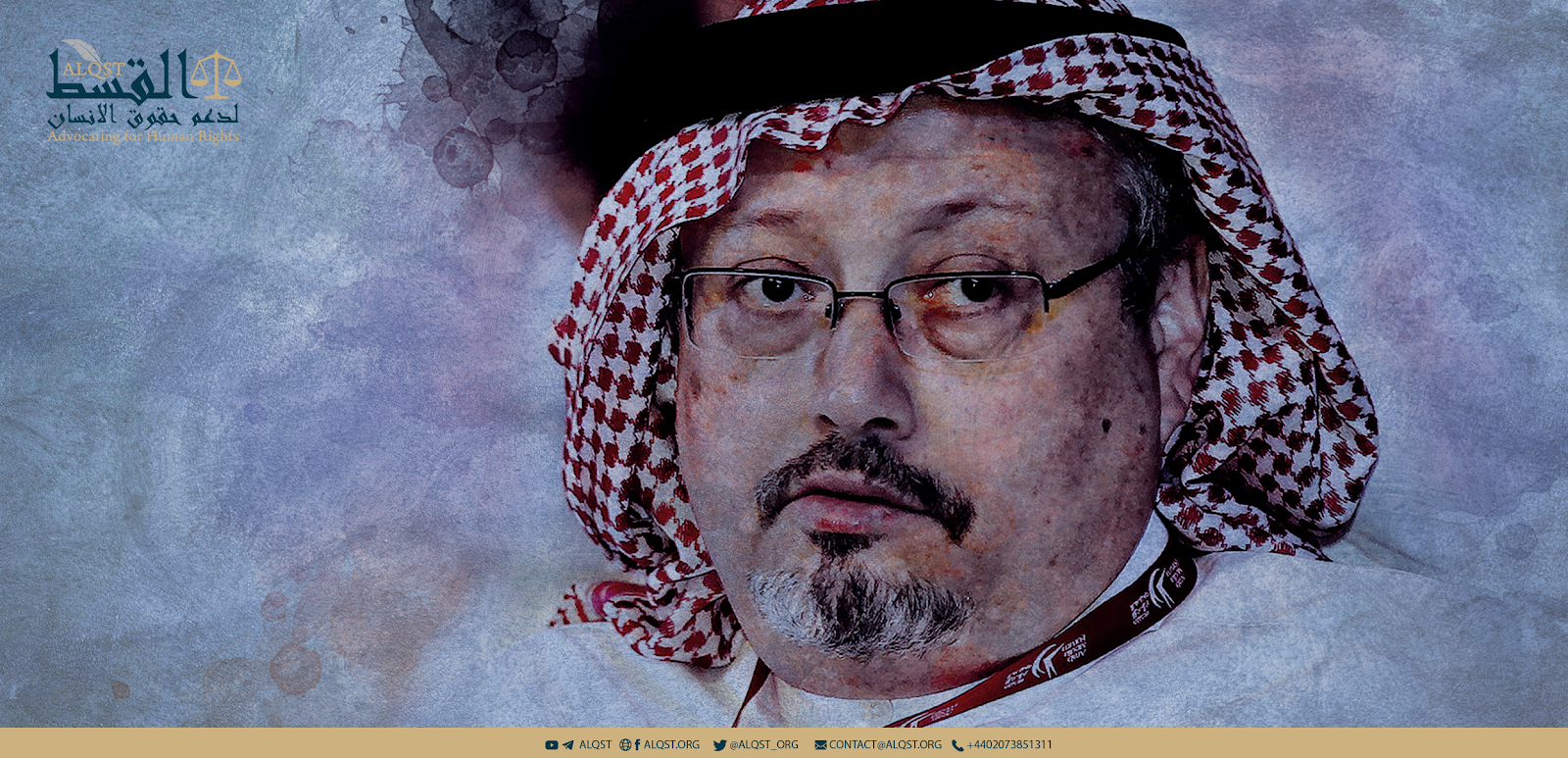
Khashoggi was lured into the Saudi consulate in Istanbul on 2 October 2018, and was there assassinated and dismembered by a team of Saudi agents. His body has never been found.
The Saudi authorities at first denied the killing and obstructed all investigation of the crime, but then conducted their own opaque and politically driven inquiry, blamed a “rogue operation”, and prosecuted 11 unidentified people in a trial widely criticised for lacking all transparency and accountability.
The UN Special Rapporteur on extrajudicial, summary or arbitrary executions, Agnès Callamard, found “credible evidence” that Crown Prince Mohammed bin Salman and other senior Saudi officials were liable for the killing, but the Crown Prince’s responsibility was not even addressed in court and the other officials were exonerated.
ALQST condemns the Saudi authorities’ failure to secure justice for Jamal Khashoggi and hold to account those responsible for ordering as well as executing his murder.
It continues to call for an impartial, independent, international investigation and trial to resolve the still-unanswered questions of who planned and ordered Khashoggi to be killed, and what happened to his body.
ALQST calls on the international community to use every opportunity, including the upcoming G20 summit meetings due to be hosted in Riyadh in November, to highlight the Saudi authorities’ shocking human rights record, and to pressure them to reform the Saudi judicial system and end their violations of Saudi citizens’ fundamental rights and freedoms.