A new briefing from ALQST highlights how Saudi Arabia’s authorities are arbitrarily barring increasing numbers of Saudi citizens from leaving the country through the use of unlawful travel bans. This punitive practice has a devastating human impact and marks a growing, often hidden, intensification of their long-standing repression of peaceful dissent.
The document, Assault on Freedom of Movement: The Use of Arbitrary Travel Bans in Saudi Arabia, draws attention to the way this policy stands in stark contrast to the modern image Saudi leaders are seeking to project to the world. While opening up to foreign investment, tourism and international celebrities, they are cruelly and arbitrarily closing their borders to many of their own citizens in contravention of both international human rights law and the kingdom’s own domestic legislation.
In recent years, and particularly the initial months of 2025, dozens of prisoners of conscience have been released after years of arbitrary detention, a testament to the impact of advocacy efforts. Yet this is not the end of their suffering, as the majority continue to be barred from travelling abroad as punishment for the peaceful exercise of their human rights.
Their travel bans have usually been imposed by the courts, often for many years, but are sometimes applied unofficially without any duration being specified, as in the case of high-profile women’s rights activists Loujain al-Hathloul and Maryam al-Otaibi. They frequently extend to family members as well, amounting to a form of collective punishment, as for all al-Hathloul family members still in Saudi Arabia and the entire family in the kingdom, totalling 19 individuals, of reformist cleric Salman al-Odah.
These arbitrary travel bans, sometimes accompanied by bans on work and social media activity, severely limit the victims’ ability to live fully empowered lives by preventing them from visiting family members outside the country and pursuing personal and professional ambitions or accessing specialist healthcare abroad.
Human rights defender Mohammed al-Qahtani, for example, was released in January yet remains under a 10-year travel ban that prevents him from reuniting with his wife and five children in the United States. Similarly doctoral student Salma al-Shehab, who was released in February, apparently now faces an eight-year travel ban that means she is unable to complete her PhD studies in the United Kingdom.
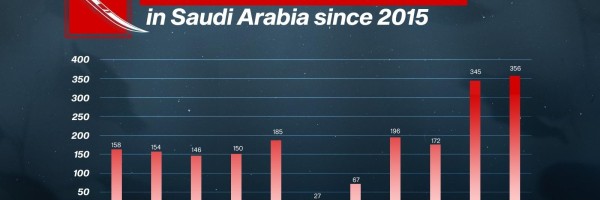
These measures demonstrate that the recent spate of prisoner releases does not mark a significant let-up in the authorities’ sustained repression of peaceful dissent, or a step change in their dire human rights practices generally. Many prisoners of conscience remain arbitrarily imprisoned, while there has been a recent upsurge in executions, notably for non-violent drug offences.
ALQST calls on the international community to urge Saudi Arabia’s authorities to immediately lift all travel bans imposed on individuals for exercising their basic rights, as well as those imposed on family members of targeted individuals, and to respect their fundamental right to freedom of movement.